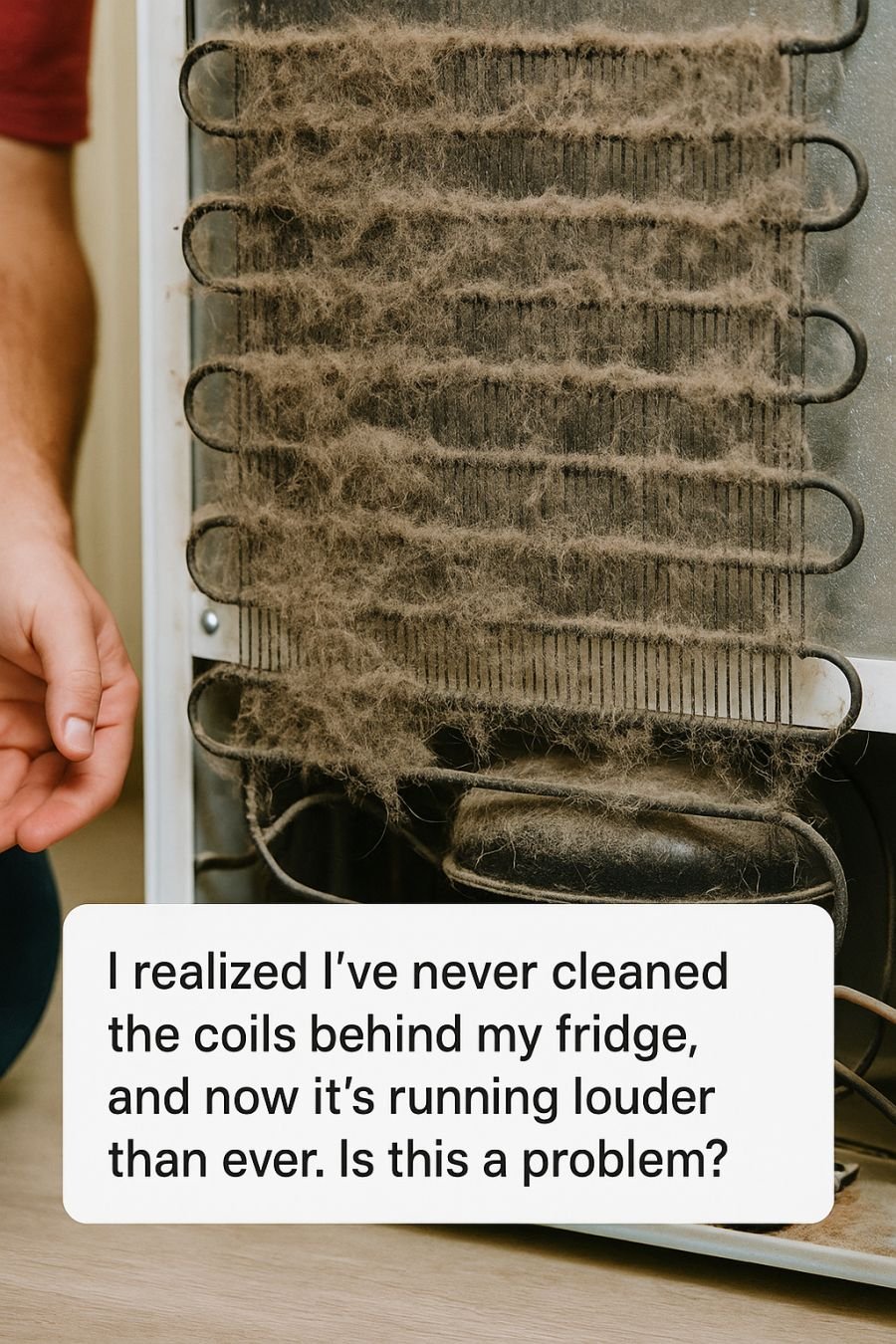
What Condenser Coils Do—And Why Dust Is Their Enemy
Condenser coils are designed to release the heat absorbed from inside the refrigerator to the outside air. This is a critical part of the cooling cycle, as efficient heat dissipation ensures the compressor doesn’t overwork itself.
Dirt and dust act as insulators on these coils, trapping heat and preventing it from being effectively released. This forces the compressor to run longer and harder to maintain the desired temperature inside the fridge, leading to increased noise, higher energy usage, and potentially even shortening the lifespan of the appliance.
Can Dirty Coils Really Make Your Fridge Louder?
Absolutely. When the condenser coils are clogged with dirt and debris, the fridge’s compressor compensates by working overtime. This increased workload can lead to a louder operation. The noise is often the result of the compressor cycling on more frequently or struggling to maintain the set temperature.
Furthermore, the fans that help in dispersing heat might also become louder as they work harder to push air through the dusty coils. The combination of these factors results in the noticeable increase in noise levels.
Other Warning Signs Your Coils Are Clogged
Besides increased noise, there are several other warning signs that your fridge’s condenser coils might be clogged. One common symptom is the fridge feeling warmer than usual, as the cooling process becomes less efficient. You might also notice the fridge cycling on and off more frequently, as it struggles to maintain the desired temperature.
Another sign is a rise in your energy bills, as a fridge with clogged coils uses more electricity. Additionally, placing your hand near the coils and feeling excessive heat can be a clear indicator that they aren’t functioning properly.
Is This a Safety Hazard or Just an Annoyance?
While a loud fridge can be annoying, it is not typically a direct safety hazard. However, if left unaddressed, the underlying issues causing the noise can lead to more serious problems. For instance, an overworked compressor can eventually fail, resulting in costly repairs or the need for a replacement appliance.