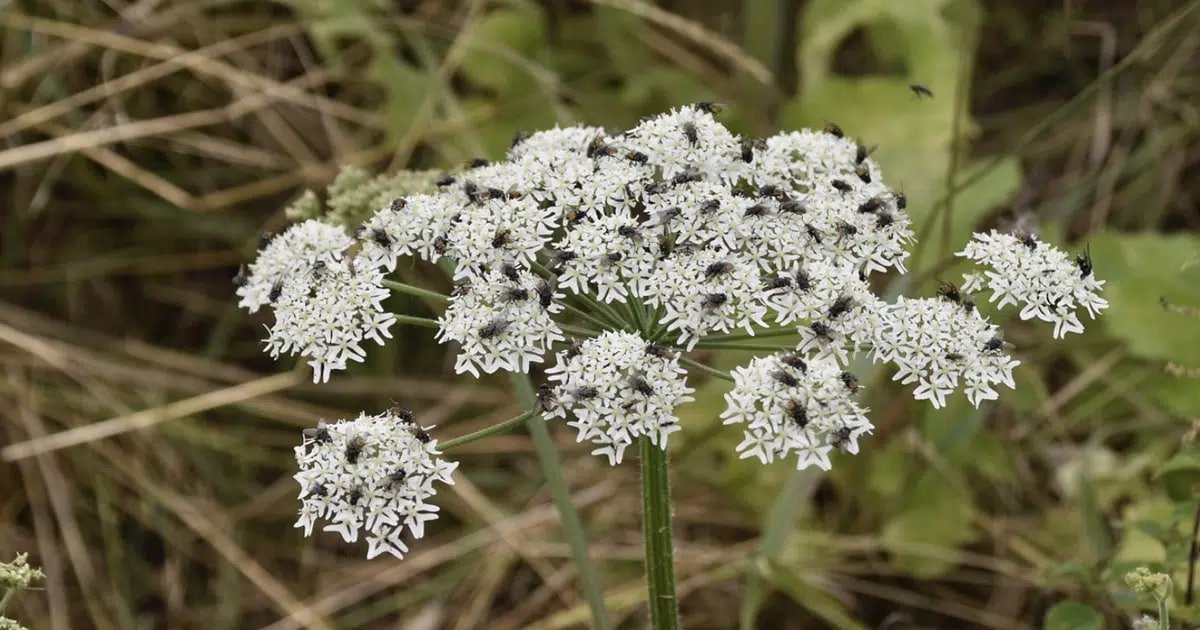
The scariest plant I might ever come across, I always used to believe, would be poison ivy. I mean, it’s the go-to villain of summer camp stories, right? But then one stupidly humid afternoon I was hiking with a friend and we happened upon this beautiful field teeming with lacy white flowers. It might have come straight from a fairy tale — except that my friend suddenly grabbed my arm and whispered, “Don’t touch that. That’s Poison Hemlock.”
Wait, what?
What Is Poison Hemlock?
Poison Hemlock (Conium maculatum). The name alone sounds as if you might stir it in with a medieval potion or sprinkle it for use in a Harry Potter spell. And, well, it kinda is one, too. It’s a dangerous plant that, on the surface, appears innocent. It’s a member of the carrot family — yes, carrots — but don’t be fooled by that affable association. This plant is Voldemort, not Bugs Bunny.
You may have already seen it without knowing it. It grows like gangbusters, especially after a wet spring. You will find it loitering in ditches, fields, by the side of the road and in the “untouched nature” part of parks that no one wants to go to. It gets tall — like 6 to 10 feet tall — and the white, umbrella-shaped flowers make it look all romantic and airy-fairy. But nope. It is a death trap in hidden form.
Why Is Poison Hemlock Called “Poison”?
Well, the “poison” part is not just drama.
This is the plant that is said to have been used to poison Socrates. Yep, the Greek philosopher. So, beyond just being deadly, it’s historically so. The entire plant — leaves, stems, flowers, roots — is poisonous when eaten. And no, I don’t mean you will catch a mild illness. I mean respiratory failure. Death. And before that, there were symptoms — shaking, salivating, paralysis, even seizures. Fun, huh?
But here’s what blew me away…